

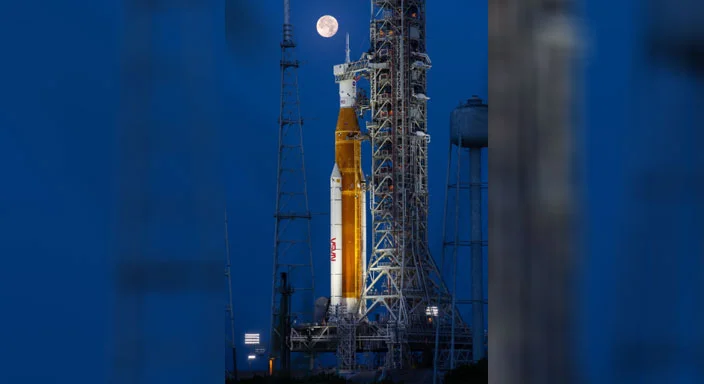
Artemis Returns Humanity to the Moon
by AJ Smadi
Over fifty years after the Apollo missions, NASA is preparing to send astronauts back to the Moon. The new Artemis program will test new spacecraft, return humans to the lunar surface, and begin the construction of a long-term presence beyond Earth as a steppingstone for future missions to Mars and the other worlds of our solar system.
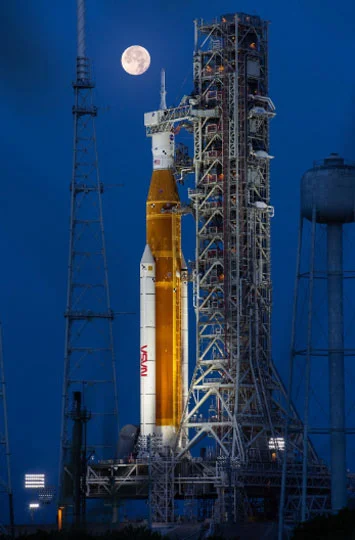
(Image credit: NASA/Cory Huston).
NASA is preparing to send humans back to Earth’s natural satellite after the last humans stepped foot on the Moon in 1972. The Artemis program represents the future of manned space exploration and will use a new generation of rockets and spacecrafts, combining international partnerships and technology. The first mission of the program, Artemis I, launched back in 2022 and tested the new Space Launch System (SLS) rocket and Orion spacecraft. This uncrewed mission swung around the Moon and paved the path for humanity’s future presence on the lunar surface, and eventually the planet Mars.
The next step in the program is Artemis II, which will be the first crewed mission of the new generation of deep space exploration. It will send four astronauts: Reid Wiseman, Victor Glover, Christina Koch, and Canadian astronaut Jeremy Hansen to travel aboard the Orion spacecraft on a 10-day trip around our Moon. This mission will not have a landing but is rather designed to test the latest life-support systems, communications, and navigation technology, this time with a crew onboard. Orion will perform what is known as a “trans-lunar injection burn”, looping around the far side of the Moon and then returning to Earth at high speeds and landing in the Pacific Ocean. This mission was originally targeted for an earlier launch, but technical evaluations and hardware readiness postponed the timeline to no earlier than April 2026.
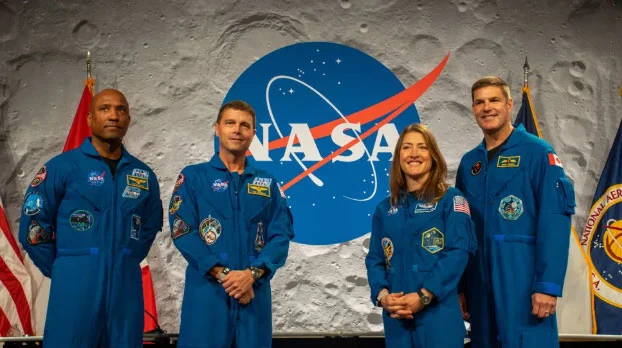
(Image credit: Josh Dinner/Space.com)
While Aremis II will be focusing on testing new systems with astronauts onboard, the following Artemis III mission is expected to prioritize deep-space architecture capabilities rather than simply sending humans directly to the lunar surface. Similar to Artemis II, the astronauts will launch aboard the Orion and enter lunar orbit, and will then rendezvous with SpaceX’s Starship Human Landing System. Instead of attempting a landing, Artemis III will focus on rigorously testing life support and docking mechanisms to reduce risk and pave the path for future lunar exploration.

An illustration of the landing position of the future Artemis III mission (Image credit: timeanddate.com).
After this milestone, Artemis IV will focus on expanding infrastructure in lunar orbit, and will continue to prepare for sustained human presence. This mission is key for delivering and building key components for the Lunar Gateway: a space station that is planned to enter lunar orbit and act as a base for future missions. For this mission, astronauts will use the Orion to dock with the Gateway, installing new modules and demonstrating long-term operations in deep space. Artemis IV also may include a crewed Moon landing, which will depend on the readiness of the systems onboard.
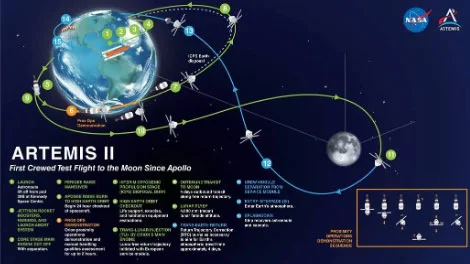
(Image credit: NASA)
Why Humans Are Returning to the Moon
The new Artemis program is not just a repeat of the Apollo missions – it has a very different set of goals and expectations. In the past, the race to land people on the Moon was almost entirely driven by Cold War competition between the Soviet Union and the United States. However now, a much more long-term mindset has been established, without the political urgency of the late 1900s. Scientists want to establish a more permanent settlement, and study the Moon’s resources such as the suspected water ice in its south pole. The lunar terrain and low gravity is also an excellent place to test technologies that will be needed for future missions to the Red Planet. With new partnerships between NASA, SpaceX, and other international and private companies, Artemis is laying the foundations for a new era of space exploration.